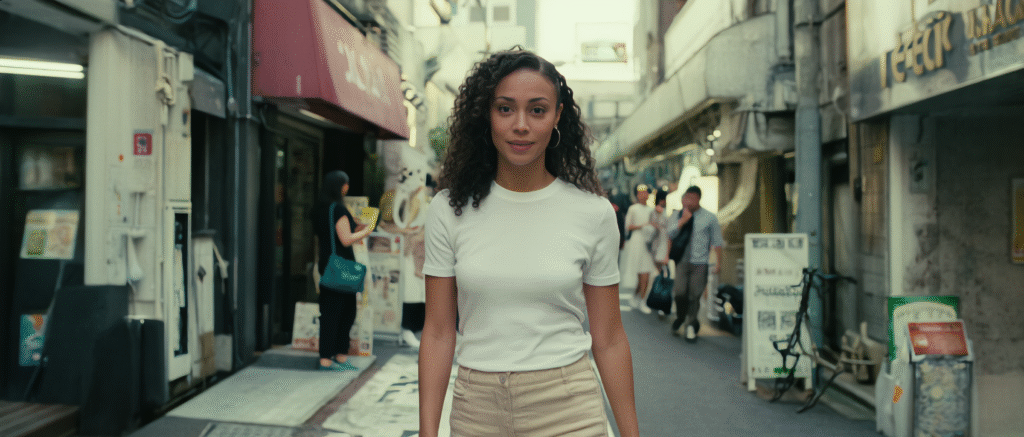
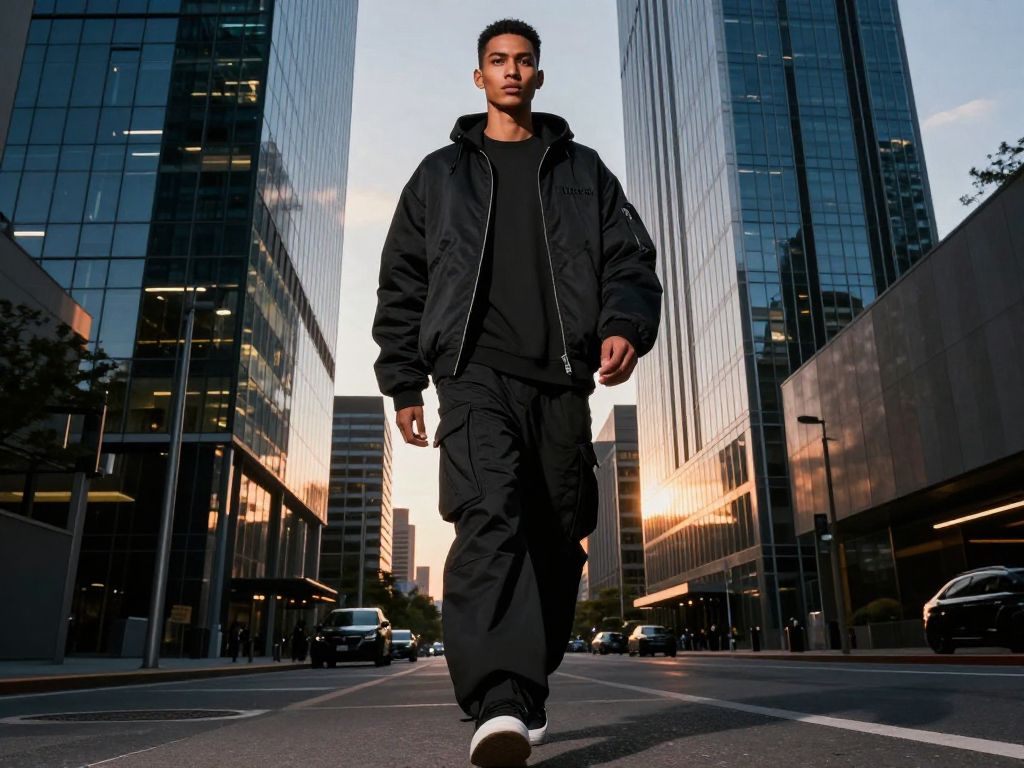
Fun fact: 228,000 is roughly the number of pixels in a small web image (600×380 pixels). You know what else is 228,0000. It’s approximately the number of active POD-powered stores online right now, according to Printful’s print-on-demand statistics. If you’ve been running a print-on-demand (POD) clothing brand and wondering why your store doesn’t feel like a real brand yet, you’re not alone. Most of them look identical. Same white-background flat-lays. Same Printful mockup templates. Same product listing layouts. The problem isn’t your designs.
The brands winning on social commerce in 2026 look, feel, and communicate like real brands. They have lifestyle imagery with models in real-world settings, a visual identity that travels from their Shopify store to their Instagram grid to their packaging inserts, and create content that stops the scroll on TikTok. Good designs are the entry point, not the differentiator. The brands that convert have better visual execution, and that gap is wider than most POD founders realize.
In this post I will walk you through five concrete steps to make your print-on-demand clothing brand stand out in 2026: from finding the niche that makes every downstream decision easier, to upgrading your product visuals without an expensive photoshoot.
Why most POD clothing brands look exactly the same
Print-on-demand clothing brand differentiation starts with understanding why the problem exists. Hundreds of thousands of stores are using the same Printful and Printify mockup templates. Those white-background flat-lay images are functional for showing print placement and product details clearly. They are not brand-building. When every store uses identical presentation formats, there’s no visual differentiation between a store that launched last week and one that’s been running for three years.
Good designs are necessary. They’re not sufficient. Two brands can have equally strong graphic work on their t-shirts and hoodies, and the one with better product presentation, lifestyle photography, and a clear visual brand identity will consistently win. This is not a design problem. It’s a presentation problem, and most POD founders underestimate how much it’s costing them.
The visual bar has risen sharply, and social commerce is what drove it up. In 2026, a TikTok or Instagram feed is where most purchase decisions start. A generic-looking product listing gets scrolled past in under a second. The brands that stop the scroll look like real brands: lifestyle imagery, consistent visual identity, content that feels made for the platform.
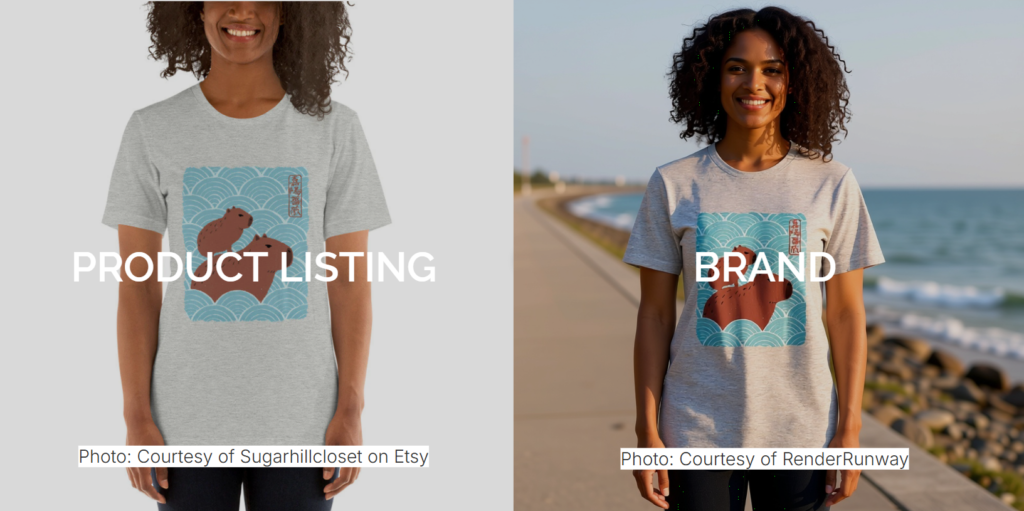
The scale of the problem is growing. Only 25% of POD retail businesses remain active long-term, and 65% close within year one. Standing out isn’t a growth strategy. It’s a survival requirement. With 368,000+ Shopify stores now using POD apps, visual sameness is the default. The brands that break from it are the ones that build something worth remembering, and here is how it’s done.
Step 1 — Find your niche and go all in
Niche selection is the strategic foundation that makes every downstream decision coherent. Before any visual strategy or social content plan, you need a clear answer to one question: who exactly is this brand for? Without it, even strong visuals won’t convert, because nothing is speaking to anyone specific.
The POD brands that build loyal audiences serve a specific community. Not “streetwear enthusiasts” but streetwear for skaters in their 30s. Nor “dog lovers” but owners of a specific breed who treat their dog as a personality extension. Not “outdoor fans” but van-lifers who live the aesthetic year-round. The tighter the niche, the stronger the signal that this brand was built for them. POD brands that actively market themselves are 7x more likely to see year-over-year revenue growth. A specific niche is the easiest way to make that marketing land.
A focused niche also means you’re not competing with every other POD store on Google or social. You’re the obvious choice for a smaller, loyal audience. TikTok’s algorithm rewards specificity with reach, and a focused account will consistently outperform a generic one. Your color palette, model choices, lifestyle settings, and caption tone all become obvious once you know who you’re building for. Without a niche, every decision is a guess.
To pick your niche, ask yourself three things:
- What does this person put on their wall, their phone case, their body? What objects define their identity?
- What communities do they belong to online? What do they post about, share, and argue over?
- What brands do they currently love, and what gap does your brand fill that those brands don’t?
Once you know exactly who you’re building for, you can build an identity they’ll recognize and remember. That’s what brings us to step 2.
Step 2 — Build a visual identity that travels
Your visual identity is not your logo. Your logo is one piece of it. The full picture includes your color palette, your typography, the way your products are presented, the tone of your captions, and the look of your packaging inserts. A brand with all of these working together reads as real. A brand that doesn’t reads as a Shopify template.
The goal is a visual identity that “travels”, meaning your aesthetic is recognizable even without a logo present. If someone sees your Instagram post, your TikTok video, and your Shopify store in the same week, they should feel like they’re looking at the same brand, not three different stores. Consistency is the differentiator. Inconsistency reads as amateur, and it erodes trust before a potential customer ever clicks through to buy.
The data supports simplicity over complexity. Unique visuals increase the chance of a brand being chosen by 14%. Simplicity pays off in product design too: single-element designs capture 56% of eligible sales. Clarity and boldness beat complexity, both in your graphic work and in your brand identity.
Your visual identity starter checklist:
- Logo: One primary logo, used consistently. Not three variations depending on which platform you’re posting on.
- Color palette: Two to three colors, maximum. A primary, a secondary, and an accent if needed. Write them down as exact hex codes and use them everywhere.
- Typography: One headline font, one body font. Use them consistently across your store, your social graphics, and any marketing materials.
- Copy tone: Write your captions, product descriptions, and email subjects in the same voice. If your store is irreverent and casual, your captions should be too. If you’re positioning as a premium brand, the copy should reflect that.
Get those foundations in place, and you’re ready to tackle the area where most POD brands lose the most ground: product visuals.
Step 3 — Upgrade your product imagery (this is where most brands lose)
Product imagery is the single biggest conversion and differentiation lever in fashion e-commerce, and the one most POD founders underinvest in. The numbers are stark: 67% of online shoppers consider product photo quality more important than any other factor when researching a product. You can have a perfect niche, a strong visual identity, and great graphic designs. If your product images don’t look like a real brand, you won’t convert.
This is where most POD stores leave the most money on the table. [Writer’s note: This always makes me wonder how invested those who start POD stores are in making it a success. Too often, it feels like people want to get rich easily, yet if there is anything 50 Cent taught us, it is that “Get Rich or Die Trying”. In other words, put in the effort, fail, but persist; quitters don’t succeed.]
Mockups vs. lifestyle images vs. AI-generated photos
Before building a visual content strategy, it helps to understand what your options actually are and what each one delivers.
Flat-lay mockups are the white-background product templates provided by Printful, Printify, and similar platforms. They’re functional for showing print placement and product details clearly. They look like every other store, and they do nothing for brand identity or social commerce engagement.
Professional photoshoots are the gold standard for brand credibility. A real model, real lighting, a controlled environment. Also: a lighting setup, makeup team, and scheduling headaches before a single image is captured. A single photoshoot can cost $5,000 to $15,000, takes weeks to organize, and produces a fixed set of images. For a POD brand running frequent micro-drops, this model doesn’t scale.
AI-generated product imagery produces lifestyle images and model shots from a single product image, without organizing a photoshoot. Modern AI fashion imagery is indistinguishable from professional photography for most marketing use cases. It’s faster, simpler, and more flexible than a traditional shoot.
| Flat-lay mockups | Professional photoshoot | AI-generated imagery | |
|---|---|---|---|
| Typical cost | Free (platform-provided) | $5,000–$15,000 per session | Subscription (typically $19–50/month) |
| Setup time | Minutes | Weeks | Minutes |
| Visual quality for social | Low — generic, no lifestyle context | High — professional, on-brand | High — lifestyle-ready, diverse scenes |
| Brand differentiation value | Low — identical to other stores | High — distinctive, credible | High — differentiated, scalable |
| Best for | Product specification clarity | Premium brand positioning | POD brands needing volume and variety |
High-resolution product photos drive 94% higher conversion rates than low-resolution photos. And offering multiple product views increases sales by 58%. Mockups alone won’t get you there. Lifestyle imagery and model shots will.
How AI model generation changes the equation for POD brands
POD brands are particularly well-positioned to benefit from AI model generation, and here’s the reason most people miss: you already have the input. Printful, Printify, and every major POD platform require clean, high-resolution flat-lay product images. Those images, the ones sitting on your product pages right now, are exactly what AI generation tools need.
AI Model Generation takes that flat-lay and produces a lifestyle image with a model, a pose, and a background setting. Multiple looks, scenes, and model variations without organizing new shoots. Your product in an urban setting, on a different model type, in natural outdoor light. Visual variety that used to require two days and a photography team now takes minutes.
Tools like RenderRunway are built specifically for this use case. Generate AI models, poses, and backgrounds from a single product image, and have scroll-ready lifestyle imagery for your store and social channels without organizing a photoshoot. Explore RenderRunway’s AI Model Generation feature
The cost difference is significant. Most brands report 80 to 90% reduction in photography costs after adopting AI tools for product imagery. A photoshoot that previously cost $5,000 to $15,000 is replaced by a subscription generating hundreds of custom visuals. Only 14% of e-commerce shops currently use AI for image manipulation, which means the early-mover advantage is still available in 2026 for POD brands that act now.
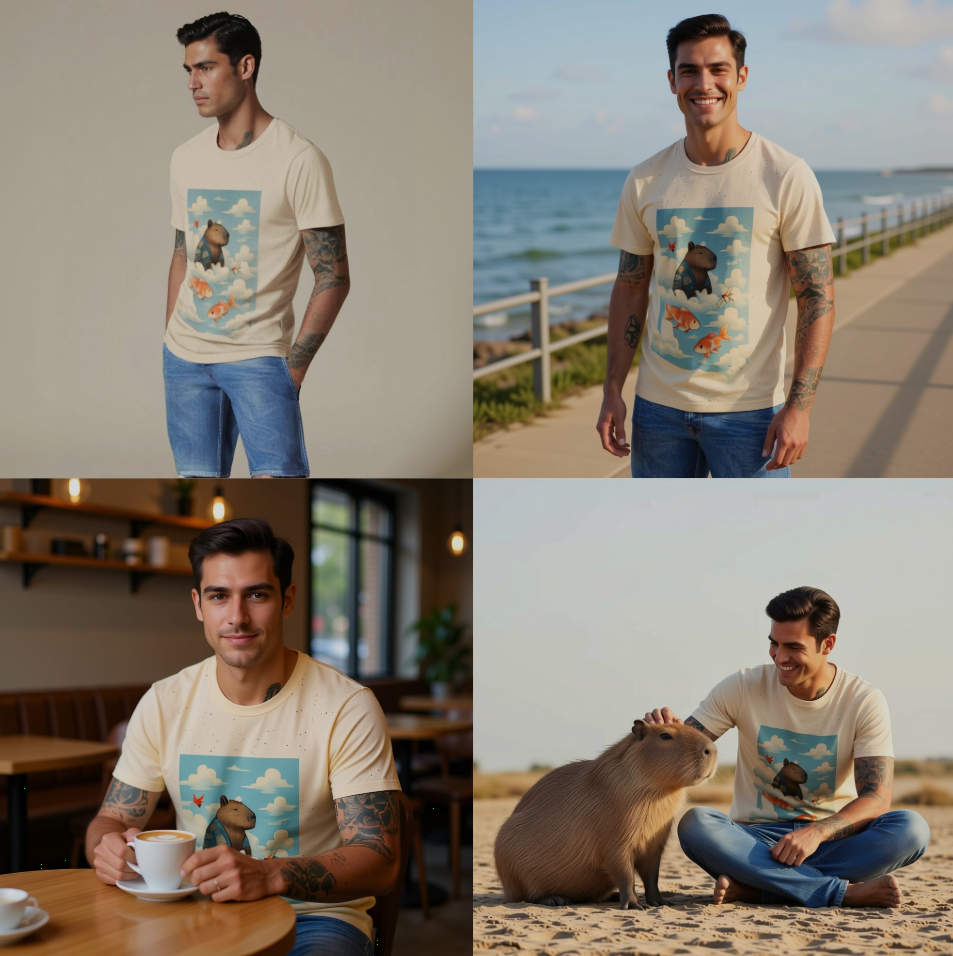
You can also explore RenderRunway’s Virtual Try-On feature as a way to show how garments look on different body types, a feature that directly addresses one of the biggest barriers to clothing purchases online. In any case, on to the next step
Step 4 — Create social content that stops the scroll
60% of Gen Z shoppers discover products through TikTok, Instagram, or YouTube before ever visiting an online store. Social commerce is not a support channel for POD brands in 2026. It’s the primary path to purchase. Your visual content strategy needs to be built for social first, not adapted for it after the fact.
Micro-drops and limited releases
The most effective POD brands in 2026 don’t launch large seasonal collections. They drop small, one to three designs, available for a limited window, and they drop often. Top-performing POD sellers add approximately seven new products monthly. Micro-drops work because they create urgency, generate social content events, and give your audience a reason to stay tuned.
A micro-drop is not just a product listing. It’s a launch event. A countdown. A sell-out moment. Each drop generates multiple content touchpoints: the teaser, the launch announcement, the “only a few left” reminder, the sold-out post. That’s four to five pieces of content from a single product, and none of it feels forced because there’s a genuine story around each release.
Fashion moves fast. Your content production should too. The practical problem with micro-drops is that they require visual content quickly. If you’re waiting three weeks for a photoshoot to turn around images for a new design, the drop momentum is gone before it starts. This is where AI imagery has a direct operational advantage: launch collections and marketing campaigns faster, without the photoshoot bottleneck.
What actually works on TikTok and Instagram in 2026
Short-form video is the most influential format for 46% of shoppers making purchase decisions. If your brand has no video content, you’re invisible to the largest POD-buying demographic. Full stop.
TikTok Shop is forecast to generate $23.41 billion in US ecommerce sales in 2026, a 48% year-over-year increase. For POD clothing brands, TikTok is no longer a brand awareness play. It’s a direct sales channel. Brands that treat it as one are already seeing the results.
User-generated content drives purchase decisions for 79% of shoppers. A customer photo wearing your hoodie on their own account is more convincing than any product image you could create. Encourage it. Repost it. Make it part of the brand story.
What stops the scroll in 2026 comes down to three things: lifestyle imagery of real-looking models in real-world settings, short video showing the product in motion, and content that feels native to the platform rather than repurposed from a product page. The good news is that AI-generated lifestyle imagery gives you scroll-ready product visuals without a photoshoot, which means your social content pipeline doesn’t have to wait on production.
Step 5 — Build a community around your brand
Community is the moat that mockup-using competitors cannot copy. Every tactic in this post — niche selection, visual identity, product imagery, social content — builds toward an audience that shows up for your brand because they feel it was built for them. A brand with a passionate niche audience is worth far more than a brand with better designs and no real relationship with its buyers.
79% of shoppers say UGC significantly impacts their buying decisions. A customer wearing your brand on their own social account is peer-level endorsement. It’s more credible than any campaign you’ll run, and it costs nothing.
Quick-start community moves for POD brands:
- Ask for the tag: Include a card in every order (or a post-purchase email) asking customers to tag your brand. Give them a hashtag and make it easy.
- Feature your customers: Repost customer photos. Name them. The brands that build real communities treat customers as collaborators, not just buyers.
- Run design contests: Ask your community to vote on the next drop or name a new colorway. Participation creates ownership, and ownership builds loyalty.
- Build your email list: Social algorithms change. An email list of customers who have already bought is a more durable asset than Instagram followers.
80% of consumers are more likely to purchase when brands offer personalized experiences. POD is inherently personal at the product level. Make this explicit in how you communicate. “This was made for you specifically” is a message most POD brands never send.
One angle most POD brands completely miss: sustainability. POD’s made-to-order model means no overproduction and no wasted inventory. 80% of consumers are willing to pay more for sustainable products. It’s a free differentiation point that almost no POD brand communicates. Add it to your About page, your product descriptions, and your social content.
FAQ — Your questions about standing out with a POD clothing brand
Do I need real models for my print on demand clothing photos?
No. You don’t need to organize a photoshoot to show your products on models. AI model generation tools let you place your product on a model in a lifestyle setting from a single flat-lay product image. This gives you the credibility of model photography without the cost or the logistics. Modern AI fashion imagery is used by brands at every scale, from solo founders to established DTC labels. RenderRunway’s AI Model Generation feature is built specifically for this: upload your product, create AI models with different poses and backgrounds, and have lifestyle-ready imagery in minutes.
Are AI-generated product images good enough for a real clothing brand?
Yes. Modern AI fashion imagery platforms produce results that are indistinguishable from professional shoots for most marketing use cases. 83% of creative professionals already use generative AI in their work. The output is used by real brands on product pages, in social ads, and across Instagram and TikTok. The quality of the result depends on two things: the quality of the input product image, and the tool you choose. A clean, high-resolution flat-lay (the same image your POD platform already requires) is all you need to get started.
What’s the difference between a mockup and a lifestyle image for POD?
A mockup places your design on a flat-lay product template. It shows what the print looks like and where it sits on the garment. It’s functional for product clarity, but generic and not brand-building. A lifestyle image shows the product on a model in a real-world setting: a street, a cafe, a park. Lifestyle images perform significantly better for social commerce engagement and brand perception. You need both, but the lifestyle image is what builds the brand. Mockups tell customers what the product is. Lifestyle images tell them who it’s for.
How much does it cost to produce product images for a POD clothing brand?
Traditional photoshoots cost $2,000 to $10,000 per session, before you factor in the time to organize locations, models, and editing. AI fashion imagery tools replace this with a subscription that generates hundreds of custom visuals per month. RenderRunway pricing tier starting from €9.99/month. Most brands that switch to AI-generated imagery report 80 to 90% reduction in photography costs, with faster turnaround and significantly more visual variety than a single photoshoot delivers.
How do I compete with bigger clothing brands as a POD seller?
Focus and specificity beat budget every time. A bigger brand targets everyone, which is actually a weakness you can exploit. You can win by being the undisputed choice for one specific community, because a large brand will never speak to them as directly as you can. Pair that niche position with professional-looking product imagery, a consistent visual identity, and social content that feels native to the platform. The brands that consistently outperform larger competitors in POD are not the ones with bigger ad budgets. They’re the ones with loyal niche audiences that trust them.
Your POD brand is five steps away from looking like a real brand
The brands standing out on social commerce in 2026 are not the ones with the biggest budgets. They’re the ones that made deliberate choices: a clear niche, a consistent identity, product imagery that looks like it belongs in a real store, content that works on the platforms where their audience shops, and a community that shows up for every drop.
None of these steps require a full creative team or expensive photoshoots. They require clarity, consistency, and access to the right tools. Creating professional fashion visuals in minutes is no longer reserved for brands with in-house studios. Growing your brand instead of managing production logistics is exactly what the right visual production setup makes possible.
Ready to upgrade your product imagery without organizing a photoshoot? Start your free trial with RenderRunway — create AI models, lifestyle scenes, and custom visuals from a single product image, so your next drop looks like a real brand from day one.